

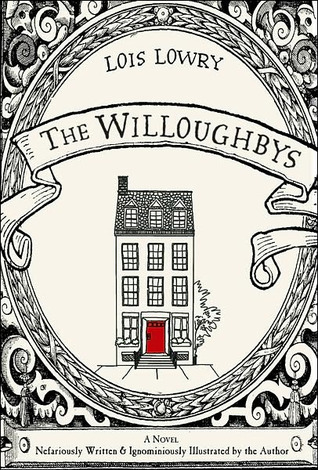
This is one of those books that has one major glaring consideration that you will need to decide on. This title is meant to be humorous from start to finish, but it is a style of humor not everyone will “get”, and if you don’t then it would certainly come across as concerning. There is also no question that there are a handful of times it is willing to go past the line to be funny. We will spend some extra time here to try and help make this clear so you can decide for your Christian child.
For those of you who are familiar, the style of humor is similar to that found in “A Series of Unfortunate Events” and other books by that author (although, that series has much less of it and has a level of perilous content this one does not). In both series we find kids in incredibly sad circumstances made worse by adults that are shown as so incompetent that we are meant to shake our heads and laugh at how absurd they are. For example, early in the book we read, “The Willoughby parent frequently forgot that they had children and became irritable when they were reminded of it”. To a young reader who “gets” that this is meant to be tongue-in-cheek, that is funny. As long as your child falls into that category then you will probably land on this one being a good fit.
Here are the majority of the examples of the humor, including multiple cases where the joking certainly crosses into unfortunate content, going too far for humor:
One parent asks, “Do you like our children?” to which the reply comes, “Oh no, I never have”.
The parents tell a version of Hansel and Gretel where the parents abandon their children in the woods, then the father says, “The end”.
At first, the kids who have never been shown love and care show very little concern for an abandoned baby they find. One sibling suggests they simply “set it out for the trash collector” (again, comes across comical, not mean).
The kids, thinking of stories they have read, say that “a true orphan has a dead father and then perhaps a mother who dies of cholera.
The older brother Tim instructs the siblings to act how they would in church, “Kneel nicely and have a pleasant look on your face, but think only of elephants”.
A man is said to be sad because he lost his wife, the the book then remarks that he wasn’t actually very fond of her, but rather that it was sad to be wifeless.
“The crocodile river was such fun. Two tourists were eaten, but it was not sad at all because they were French”. Similarly, the parents say that the death of their pilot wasn’t a big deal because he was a Presbyterian.
A man thinks, “Oh, if he weren’t such a decent man, he might be tempted to pat her large behind affectionately as she bent over. Shaking his head to get rid of such an improper thought”.
To the kid who raises his hand excitedly, saying, “I know, I know” in class the remark comes, “No wonder nobody can stand him”.
One odd thing we wanted to point out. The author goes out of their way to point out that the older brother Tim has a “heart of gold”, but this is not reflected in his actions or words in this book. Tim is bossy and rude. At one point he tells Jane, “You needn’t, because you are a girl. You will never be called on for important work”. He does other things, like call the discovered baby “ghastly”. He kicks a cat in frustration. He calls Jane a dodo.
A major portion of the plot revolves around the kids sending their parents on a very dangerous vacation, hoping this will cause them to become orphans (which would be better in their mind than being raised by these two). This leads to things like Tim being upset when he receives a postcard saying the parents are ok.
Some children may be a bit challenged by the vocabulary here. Even the title lists the book as being “Nefariously Written & Ignominiously Illustrated”. (note that there is a glossary that defines them, typically alongside a related joke of some kind).
A few other things to be aware of:
Madonna is named as a potential baby name (no direct mention of the music artist)
There is a mention of luck and being lucky. At one point all of them, including the nice housekeeper, close their eyes and “wish fervently” for a disaster to happen to their awful parents.
Raisins are referred to as “turds”
Jane asks if an alligator would eat someone in one big bite or “in chunks”.
An earthquake happens and (out of character with the book) the article shows “thousands killed” (again, meant to be a bit humorous as, yet again, somehow the terrible parents survived).
The kid's mother, who is a terrible character, has a “going to church” hat.
There is beer drinking at a wedding.
A joke in the back mentions mormon missionaries. Another references nuns.
In the glossary, the author mentions scary movies, including the name of the scariest one she has ever seen.
An example is given that includes a “drunk guy barfing on the sidewalk”.
When Nanny says no about candy, the kids say they will have to sneak it.