
The most important potentially concerning aspect of this book comes near the end. The story takes an interesting, but likely unexpected shift and contains a series of action and content that may surprise and bother some younger and/or more sensitive readers. The robot Roz, who has had a peaceful experience in nature for the first 90% of the book, finds himself being hunted by other robots and he and his animal friends must defend themselves (destroy the other robots) to protect him. — During the winter season Roz finds multiple animals who have frozen to death (the book specifically mentions “corpses”). The reader is told that this is likely just a few of the many who have met this fate. While this leads to a very nice development where Roz helps find a solution to save many more, it is still something that some parents may not feel their younger child is ready for. There are other related comments sprinkled into the dialog, such as “all living things die” and “by then we will all be dead, even me” (referring to a long time passing). The first human we meet is not shown in a good light and ends up shooting a beloved goose character with a rifle in a dramatic scene. During the robot scene at the end (see above) one of the new robots threatens to “squeeze the life out of” one of the animals. — There are just a few minor instances to be aware of. At one point a husband animal makes a decision and is immediately contradicted by his wife (making the point that she is in charge). A ship is destroyed at sea which, while not described in detail, may be an idea that will frighten some. One character says that “nobody can actually come back from the dead”, which as Christians we know is certainly not the full story (this is an important line to discuss with your children). A few times we hear unfortunate comments around implying that kids at certain ages are moody or a handful. There is a comment that the waters around the island are rising each year, but the cause is never implied or explained.

Psalm 101:3
Quick Answer: Recommended
Concern Level: Medium
The most important potentially concerning aspect of this book comes near the end. The story takes an interesting, but likely unexpected shift and con... → Continue reading below
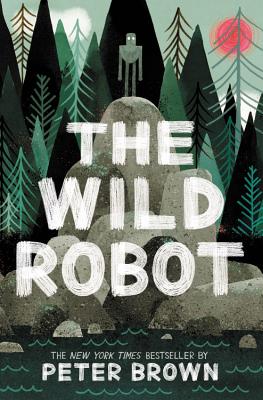
The Wild Robot
VERDICT: Recommended
(with caution)
Concern Level: Medium
Christian Parent Review
The first book in this series is a really unique and interesting idea for a story. Young readers get to imagine a robot coming to life for the first time out in a totally wild nature setting. It has illustrations along to help this come to life as the story moves along. It contains chances to absorb a lot about nature and has highlights around family and friendship. It really is a neat story. The vast majority of the book is very light, fun and interesting, but the ending and a handful of other items explained above are important to consider for your specific reader.
Note: This information is typically from the publisher.
Use with caution
Wall-E meets Hatchet in this #1 New York Times bestselling illustrated middle grade novel from Caldecott Honor winner Peter Brown — Can a robot survive in the wilderness? — When robot Roz opens her eyes for the first time, she discovers that she is all alone on a remote, wild island. She has no idea how she got there or what her purpose is--but she knows she needs to survive. After battling a violent storm and escaping a vicious bear attack, she realizes that her only hope for survival is to adapt to her surroundings and learn from the island's unwelcoming animal inhabitants. — As Roz slowly befriends the animals, the island starts to feel like home--until, one day, the robot's mysterious past comes back to haunt her. — From bestselling and award-winning author and illustrator Peter Brown comes a heartwarming and action-packed novel about what happens when nature and technology collide.
Above Reproach: We intentionally do NOT use referral links on this site.
Purchase Book Convenience LinkOther Reviews for this Book
Plugged In
Does not cover all of the potentially concerning content. Actually, the description of the “violence” is summarized in a way that would likely lead some parents to believe there is more here than there really is.
Read ReviewScripture Reflection
His divine power has given us everything we need for a godly life through our knowledge of him who called us by his own glory and goodness. Through these he has given us his very great and precious promises, so that through them you may participate in the divine nature, having escaped the corruption in the world caused by evil desires. For this very reason, make every effort to add to your faith goodness; and to goodness, knowledge; and to knowledge, self-control; and to self-control, perseverance; and to perseverance, godliness; and to godliness, mutual affection; and to mutual affection, love. For if you possess these qualities in increasing measure, they will keep you from being ineffective and unproductive in your knowledge of our Lord Jesus Christ.
— 2 Peter 1:3-8
--- See More Christian Parent Reviews ---
More Christian Parent Reviews