

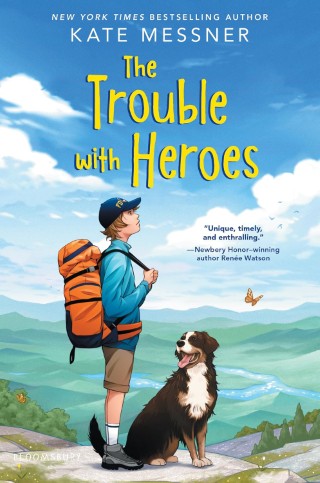
This book is one of growth and healing, but parents should know that the character we see this book through the eyes of (Finn) is a very hurting young man and his behavior and inner-dialogue along this path is something you will need to consider for your particular reader. We highly encourage parents to read through all of this section, but also the next to get the full picture for their decision on this one.
Tragedy Finn’s his life has made him very negative and sinical, and at times immoral. We will share details here so you can properly weigh this and determine if your reader can/should wade through this on the path to healing:
- The book opens around vandalism that Finn has committed, but the most concerning part is that at this point in his journey he shows no remorse and says, “Next time I do this I’ll be smarter”. (He remarks that a part of what he did was to “let God know how mad you are”.
- He refers to an assignment as an “Introductory Poem for the Stupid Poetry Class”. Another title refers to the assignment as “pointless”
- “There’s no such thing as a hero… Name your hero and give me an hour online. I’ll do a deep-dive search and pull up everything you didn’t want to know. Who they cheated and cheated on…”
- During this down time, we hear a lot about him skipping classes and work.
- We see mom really trying with Finn, to which he says or thinks things like “whatever”, “fine”, “blah blah blah”.
- One of the best parts of the story revolves around mentors that come alongside Finn, but early on much of his inner dialogue is very critical of these people. He also tries and manipulates one of these ladies early on, only being nice to her when he realizes he needs something.
- While studying an ant carrying something, all of a sudden he just flocks it, mocking it as he does.
- Finn shares what people wrote in his yearbook last year, but then adds a sinical “what they really meant” after it. For example, “Thanks for being a good friend” is shown to really mean “Thanks for letting me copy your math”. At one point he thinks, “SHUT UP YOU STUPID COW NANNY!”. He thinks to himself that one is “blabbering on”.
- He lies to one mentor and justifies it to himself
There is a lot of this as it comes page after page for much of the book.
There is also a heaviness parents should be aware of. Finn has lost his farther, but the circumstances bring some extra weight/heaviness. The backstory involves Finn’s father as a rescuer during 9/11 that never fully came back from the experience. We eventually find out he fell into drinking and eventually completely retreats by pouring his full life and attention into his work as a paramedic, which more heaviness is introduced as this is shown during very tragic times during Covid. Mom eventually left Dad with Finn. Finn is carrying all this around with him and no faith/hope to lean on (at one point the book has Finn think “Now that Dad’s gone, I don’t think we believe anymore” in reference to the chance of a miracle). To add to this, it all leads Finn to wrestle with whether the absence of his father meant he didn’t really love him or his mother.
Other items to be aware of:
A comment is made, “Did you know there are horror movie monsters in these woods?”. Similarly, someone comments “There are ghosts on the trail today”.
There is a point near the end where Finn seems to imply his dad and other deceased are “drifting through this wide-open wild”. Later Finn comments of a deceased lady, “since you’re looking down from wherever now”.
There is a local superstition that if you take a rock from a particular mountain it won’t rain. Both Finn and his guide do it.
A local story is told of someone who accidently shot himself. Story mentions “bleeding all over”.
A friend says, “Dude, you look like you got in a bar fight”.
The following terms appear: farty-butted, crotch, crap, farts, stupid-butt, screwed, omg, nerd, jerk, stupid. There are flippant uses of “oh my god”, “for God’s sake”, “what in God’s name”. A character is said to have cussed loudly and at one point when attacked by hornets Finn “swears like a sailor”. A mountain is named “Nipple Top”