
While there is certainly concerning content to be aware of, but most of it is relatively mild and spread out across a longer storyline filled with a lot of good. Probably the first point to make is that somewhat often the children bicker and treat each other unkindly and some of the time there is no adult around to correct this. The worst of these is when Peter tells his sister not to be a “prig” and then a “little Sunday school prig”. This occurrence is a case of when someone tries to turn holiness into a negative, as if we can go too far in being good, virtuous and focusing ourselves on our faith. The most obvious wrongs, such as stealing for the sake of the family, are handled very well and explained as wrong and, again, there is a lot of good interaction as well. — The main storyline of the book has the father disappear from the story with little explanation and mother becoming very absent. This is explained near the end, but for quite a while it creates a strange void. Even when it is explained, we don’t think it really justifies the mother’s behavior. This may be worth discussing with your children, or at least being ready if questions come up. — A few references to be aware of are mentions of a cigar & tobacco pipe, beer, idiots, stupid, “little gutter child”. Mother, in frustration, at one point says, “What a horrid old woman”. Later someone is said to have a “big waist”. — There are also some things that modern readers, especially children, probably won’t understand at first. This is mostly concerning old activities and terminology that are no longer used or which has changed meaning over time. The most important of these is the use of the term “gay” to mean “happy”, which a child would likely misunderstand. Another example has brandy used as medicine. — There is an occurrence that shows the nation of Russia in a very negative light. During this we learn of a man who signed up to fight for Russia in a war in order to get out of his wrongful imprisonment. The man uses this opportunity to escape and run away to find his family. This is obviously a complicated scenario and may bring up questions of right and wrong in desperate situations. There is also some discussion between kids where people from Japan are referred to as “Japs” and one child makes a comment that all foreigners are basically the same. There is also an unfortunate comment by a child that politically, whatever side of the aisle you are on you are to stick with it no matter what happens (something that we Christians should not agree with). The kids discuss marriage and say things like it will be an “awful bother” or that they hope their spouse has trances and only wakes up once or twice a year, but this is all meant to be seen as silly talk between kids who don’t know any better. There is also discussion between a doctor and the son of the family. The doctor is trying to get him to treat his sister better and is basically explaining that there are real differences between boys and girls (something our culture is currently trying to ignore). During the discussion he uses terms like “softer” and “weak” that are obviously not common today. This turns into a funny scene when Peter goes home and shares his shortened summary with his sisters, who are not amused. There is one instance where the author indicates that it was “rather good” that a child lied in order to protect someone’s feelings. — There are a few times when a kiss is given by a non-family adult to a child. This is meant to be a kind gesture, but should probably be discussed if your child reads this book.

Psalm 101:3
Quick Answer: Recommended
Concern Level: Medium-Low
While there is certainly concerning content to be aware of, but most of it is relatively mild and spread out across a longer storyline filled with a l... → Continue reading below
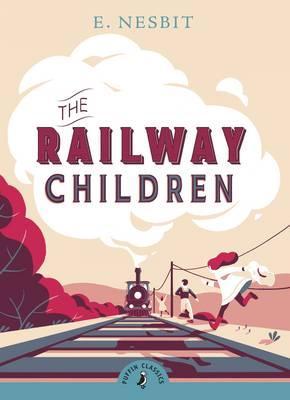
The Railway Children
VERDICT: Recommended
(with caution)
Concern Level: Medium-Low
please read full review for consideration
Christian Parent Review
This is a wholesome story from the past about a loving family going through an extremely challenging time, but shown through the eyes of the three children who are unaware of the circumstances. It is told in chapters that bring adventure, but the type of adventures that happen in a regular town over the course of everyday life. The result is a (mostly) sweet tale that revolves around the life of 3 siblings. These stories are full of courage, repentance, kindness and helping others. They meet plenty of very solid characters, several of which grow during the course of the story. — There are a handful of solid references to our Creator. At one point the youngest daughter mentions her uncle Edward being in Heaven and mother replies that “God has taken Him… He’s only away for a little time. We shall see him some day”. The children are told to “be brave, be patient and to pray”. Mother later says, “Don’t you think it's rather nice to think that we’re in a book God is writing… God knows how to make the story end just right”. This title is the start in a series that looks to be a solid choice for our readers.
Note: This information is typically from the publisher.
Use with caution
In this much-loved children's classic first published in 1906, the comfortable lives of three well-mannered siblings are greatly altered when, one evening, two men arrive at the house and take their father away. With the family's fortunes considerably reduced in his absence, the children and their mother are forced to live in a simple country cottage near a railway station. There the young trio - Roberta, Peter, and young Phyllis - befriend the porter and station master. The solution to the puzzle of what happened to their father and many other details and events of the childrens' lives come to vivid life in this perrenial favorite, a story that has captivated generations of readers and, more recently delighted television and motion picture audiences. This book will charm a whole new audience of young readers with its warmth and appeal. Recommended for ages 8 to 12
Above Reproach: We intentionally do NOT use referral links on this site.
Purchase Book Convenience LinkOther Reviews for this Book
Plugged In
This is a short review, but may be worth skimming
Read ReviewScripture Reflection
All a person's ways seem pure to them, but motives are weighed by the Lord. Commit to the Lord whatever you do, and he will establish your plans. The Lord works out everything to its proper end—even the wicked for a day of disaster.
— Proverbs 16:2-3