
There is quite a bit of content below, but nothing comes across as blatantly crossing the line. Most of the concerning comments come from characters who are shown in a negative light and who the author purposely develops by the end of the book. The most concerning part of this book comes in the form of one character, Miles, making a long list of strange comments about “the afterlife” (e.g. “no one will need to use the bathroom in the afterlife”). These come at random times throughout the book. We find out later that this is due to a traumatic experience where he believes someone passed away in front of his eyes (we find out more about this event later in the story). While this is later explained and used in his growth, it is not something you would want a child, even older children, reading without a discussion on how popular it is today for non-Christians to have vague, non-biblical beliefs about what happens to a person after they die. This gets additional focus to the child because another of the book’s characters philosophy contrasts with this. This character lives in fear about death of himself and those around him. The “bad character” (also later redeemed) is a young child named Phillip. His response to strange afterlife comments is to say things like, “There is no such thing as the afterlife. This is your only life. The sooner you realize that the more successful you will be… the afterlife is an old fairytale… we don’t know how long we’ll get to live so we might as well make the most of it… don’t believe in souls or any of that spiritual junk, why should I, certainly never seen any sign of it in this life.” Now, it does really matter that Phillip is seen in a very negative light when making these comments (we later find he lost his mom at 3 and his Dad is awful), but you need to make sure comments like this won’t land with your particular child and be used to drive doubt. A book in the library is titled, “I’m a Monkey’s Uncle, and so are You.” There is a comment later pointing out that humans and chimpanzees share 98% of their DNA. This is something parents will want to address (that turns out to be a HUGE difference from that 2%!). The young girl character Daisy is seen often reading “romance novels” (we find out later she actually wasn’t and the main character is said to have comic books. These are both things that we hear used lightly in books, but in real life today these are things for Christians to avoid. Daisy also makes one, seemingly out of character, shallow comment about wanting to live in a mansion with 10 friends who are all pretty and smart, but none as accomplished as her. Closets full of tons of outfits. Daisy also grows a ton, but during the start she has moments of being cold and says things like “after all, every story has 2 sides so who was I to decide right from wrong?” in response to something that was clearly wrong. Phillip also grows tremendously, but early on he is motivated by revenge, is outright sneaky and wicked and believes the ends justify the means, which he thinks is proved by his cousin who followed the same approach getting into a major university and having worldly success. At one point he says, “the more people dislike you, the more they will want to stay away from you and the more you can get away with.” His dad comments that “people don’t change, they only get taller” and he says, “girls can be pretty or smart, but not both”. Again, this comes in a negative light, but good to know so you can gauge the potential impact given your child’s maturity. The main family is not perfect as there is some hiding things from parents and a comment where the family had given up on him cleaning his room. There are a couple light references to ghosts. The worst of which a character says, “I almost expected a ghost to charge out of one of the stalls wailing. I read a lot of books so I knew it was possible.” Finally, a couple of times the book refers to going to a public/private school as going to “real school”. This is an indirect shot, whether intended or not, at homeschooling, which many Christians have found to be an option that allows them to educate their children within their home, and according to their faith

Psalm 101:3
Quick Answer: Recommended
Concern Level: Medium
There is quite a bit of content below, but nothing comes across as blatantly crossing the line. Most of the concerning comments come from characters ... → Continue reading below
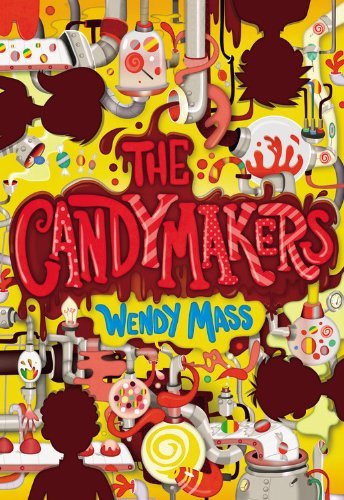
The Candymakers
VERDICT: Recommended
(with caution)
Concern Level: Medium
Christian Parent Review
Early in this book a Bible verse appears, used in a note to the main character from his mother. A bit later it is followed by a G.K. Chesterton quote. At one sad point a worker asks for a moment of silence and prays. Unfortunately, this is where the Christian content stops and these items feel like a teasing sprinkling of what could have been. That disappointment aside, this is a solid secular recommendation that Christian parents who are comfortable with the concerning content provided above can share with their kiddos (potentially turning this main concern into a positive by discussing our belief about Heaven versus the world’s shallow “spiritual” views or just plain sad humanist “this is all there is” views). It should be noted that while the length of the concerning content is a bit long, this book is longer than most of its type and none of the items fall into the category of what many parents consider dealbreakers (the strangeness of the “afterlife” mentions being potentially the worst). The setting of this book is fun, based within a candy factory and revolving around a contest to create a new candy that will draw kids interest. It is more realistic and “our-worldly” than the similar title Charlie and the Chocolate Factory (not to mention safer than that author’s books). The format is really neat as well, as you go about 80% of the way through the timeline the book covers with one character before jumping back and seeing the events through the eyes of the other characters, one at a time. There are even some exciting twists throughout the book. The characters here are very solid. The primary young man Logan and his parents are very kind and shown in a positive light. The same goes for all of the workers at the candy factory we meet along the way. The other 3 contestants are flawed in their own ways, but we get to see there is much more to them as the book unfolds. A really nice friendship eventually unfolds. The author does a good job of revealing why characters are flawed without going too far and justifying what they were doing. We find out that the main character has serious burns and there is some content around how people look at him for a few seconds too long. This is something some parents may want to keep in mind and use as a teaching moment. Similarly, there is a lot of negative impact to absentee parents due to jobs. This is contrasted with the loving family of the candymakers. This similarly can be a great discussion topic (and possibly a challenge to the setup of some Christian homes).
Note: This information is typically from the publisher.
Use with caution
Four children have been chosen to compete in a national competition to find the tastiest confection in the country. Who will invent a candy more delicious than the Oozing Crunchorama or the Neon Lightning Chew? Logan, the Candymaker's son, who can detect the color of chocolate by touch alone? Miles, the boy who is allergic to merry-go-rounds and the color pink? Daisy, the cheerful girl who can lift a fifty-pound lump of taffy like it's a feather? Or Philip, the suit-and-tie wearing boy who's always scribbling in a secret notebook? This sweet, charming, and cleverly crafted story, told from each contestant's perspective, is filled with mystery, friendship, and juicy revelations.
Above Reproach: We intentionally do NOT use referral links on this site.
Purchase Book Convenience LinkOther Reviews for this Book
Redeemed Reader
Short, plot-summary review worth skimming.
Does not bring up much in the way of concerning content. Does quickly mention the “afterlife” item.
Read ReviewScripture Reflection
Submit yourselves, then, to God. Resist the devil, and he will flee from you. Come near to God and he will come near to you. Wash your hands, you sinners, and purify your hearts, you double-minded. Grieve, mourn and wail. Change your laughter to mourning and your joy to gloom.
— James 4:7-8
--- See More Christian Parent Reviews ---
More Christian Parent Reviews