

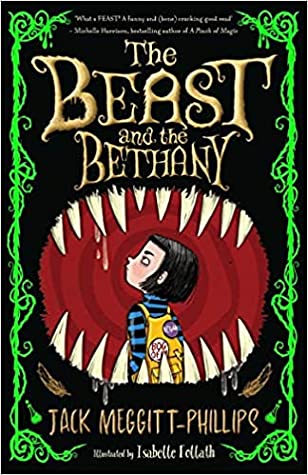
The most important thing to know about this book is that it is a highly disturbing horror book targeting children.
The first line in the first chapter introduces one of the main characters as “a terrible man with a wonderful life”. It goes on to describe a wonderful life as having plenty of food, never struggling to understand words because he very rarely read books. He has no children or friends (marriage is not mentioned) and there were no parties or celebrations that he had to attend (thus praising loneliness). He did not worry about what to wear nor did he worry about death. He is about to be 512 years old but looks 20 and handsome. He has a "wonderful look of innocence about him" yet, as you read, he is a liar. Poor definitions, attitudes, ways of thinking, and behavior continue throughout the book. In exchange for a magic life-giving potion from the beast, the man attempts to kidnap, drug and buy a child to feed to the beast without any social consequence. At one point, he wishes he had a family of his own so he could feed one of his own children to the beast. This showed his extreme selfishness and lack of morals. He was pleased to make the beast, “his master” happy. In exchange for meals, the beast vomits anything the man requests in a ritualistic way (eyes closed, wiggling, humming, moving side by side) each time. He is described as a magical all-consuming creature. He is also able to control anything he vomits out. Its description would be frightening to most, especially children of the suggested reading age. Yet, anyone who meets the beast is prepped beforehand to tolerate a sight and voice that should initiate a fight or flight response. Thus, there is a lack of awareness of danger.
Bethany’s lack of respect for others, especially adults, is throughout the book. She calls the adults names such as “loser”, “nitwit”, and “idiot”. She damages their property and tries to steal their things and tells them to “bog off”. At one point she insulted the man and punched him multiple times. None of her actions have actual consequence. She does attempt to right some wrongs and apologizes to another child but concludes that she did not feel happier about apologizing. Rather, she felt worse and called the child “stupid rat”. Her character delights at opportunities to make mischief. In some ways, it's her mischievous behavior that saves her in the end (not a good message for children).