
The biggest concern here is the very real threats made on the children’s life by the main villain, Count Olaf, and his wicked troupe. Olaf and crew are not in any way afraid to threaten to take a life to promote their villainy. Similar to how many adults today would consider Cruella Deville one of the scarier villains from their childhood, it is Count Olaf’s ‘realness’ that makes him fear-inspiring. Unlike many villains of fantasy, he is someone you can picture meeting in real life in this world broken by sin. At one point the baby is ‘snatched up’ by the villain, upon reacting to this, Clause is struck in the face. This terrible crew also gets drunk. It is also important to know that the book starts out and revolves around the tragic death of the children’s parents in a house fire, two topics that could easily trigger real fears in even stronger children. The children being very poorly taken of by incompetent adults for the rest of the story may have a similar effect on some who find themselves in real-life unfortunate circumstances. One of the more disappointing items of concern, when things get to their worst, sadly, one of the main characters wishes she had bought poison to put into Count Olaf’s soup as an escape to what feels like an impossible and life-threatening situation. One final note, one of Count Olaf’s helpers is described as someone who looks 'neither like a man or a woman'.

Psalm 101:3
Quick Answer: Prayerfully Consider
Concern Level: Medium
The biggest concern here is the very real threats made on the children’s life by the main villain, Count Olaf, and his wicked troupe. Olaf and crew a... → Continue reading below
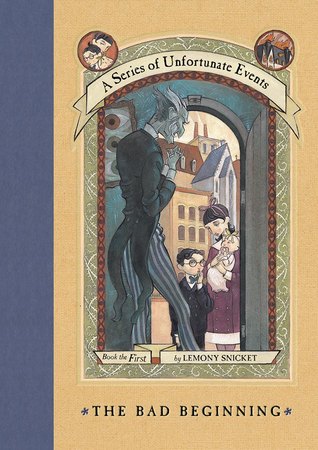
The Bad Beginning - Series of Unfortunate Events 1
VERDICT: Prayerfully Consider
Concern Level: Medium
Christian Parent Review
This is a tricky book to review, but that also makes it an important case to help parents make an informed decision on. The author tells us up front that this will not be a happy story. On one level, that is certainly true. The children are mired in unfortunate events throughout. On the other hand, there is some humor throughout and the loyalty and close relationship of the siblings, especially in a secular book, is refreshing. The ending helps explain this multi-level consideration. The book concludes with the children in an unresolved, uncertain, unfortunate situation, but on the other hand they did successfully manage to foil the evil plot of Olaf and his associates and they still have each other. This will be one where it is important to consider all of the content listed above carefully when making your decision.
Note: This information is typically from the publisher.
Use with caution
I'm sorry to say that the book you are holding in your hands is extremely unpleasant. It tells an unhappy tale about three very unlucky children. Even though they are charming and clever, the Baudelaire siblings lead lives filled with misery and woe. From the very first page of this book when the children are at the beach and receive terrible news, continuing on through the entire story, disaster lurks at their heels. One might say they are magnets for misfortune. In this short book alone, the three youngsters encounter a greedy and repulsive villain, itchy clothing, a disastrous fire, a plot to steal their fortune, and cold porridge for breakfast. It is my sad duty to write down these unpleasant tales, but there is nothing stopping you from putting this book down at once and reading something happy, if you prefer that sort of thing. With all due respect, Lemony Snicket
Above Reproach: We intentionally do NOT use referral links on this site.
Purchase Book Convenience LinkOther Reviews for this Book
Equip
This is a solid review with a short review over the entire series.
Be a bit cautious as this is a lesser known site (they do have a beliefs statement)
Read ReviewPlugged In
A short review from Plugged In
Be a bit cautious, Plugged In often 'buries the lead' when it comes to concerning content. That is certainly the case here as they seemingly gloss over the threats on the children's life.
Read ReviewSqueaky Clean Reviews
While this is a Christian review site, it looks like anyone can submit a review. It says they are 'reviewed for quality', but some caution should still be used for this site.
Read ReviewScripture Reflection
Children, obey your parents in the Lord, for this is right. 'Honor your father and mother'—which is the first commandment with a promise—'so that it may go well with you and that you may enjoy long life on the earth.' Fathers, do not exasperate your children; instead, bring them up in the training and instruction of the Lord.
— Ephesians 6:1-4