

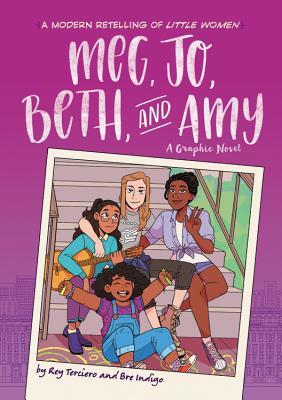
When reading this section, try to keep the original Little Women (and other classic works) in mind to really help grasp what these authors have done here.
The biggest issue with this ‘retelling’ is the introduction of the main character now ‘coming out’ to her family as gay. There is a big build-up to this moment (mostly through journal entries) as well as an emotional celebrating and encouraging when it occurs. The author uses this as a time to send messages like, “Love shouldn’t be hidden. People should be proud of who they love” and responses like being “proud you spoke your truth” and we “support you 100%”. This all culminates with a secret revealed that the Aunt has also been gay all these years and has finally been brave enough to tell someone. During this scene she makes a series of comments Christian parents will not want their children reading, referencing her “devoutly religious” parents from whom she says she adopted “many of their more unseemly attitudes towards certain groups” and implying that seeing being gay as sinful is wrong. The male author is described as ‘queer’ at the end of this book and the female illustrator also thanks her ‘wife’ in the dedication.
To make the above point much worse, many will see in this book misleading ties between the LGBTQ movement and the movement to end racism. For example, “The world has changed so much, and for the better. Not just for the people of color and for people of other religious beliefs, but also for the LGBTQ community”. This is one of several references where we see the ‘myth of progress’, the modern world tried to sell (another example: “while the world is not where it should be, it’s on it’s way…”). At one point there is a historical reference to the Black Panther Party supporting the LGBTQ+ movement in the 70s.
There is a strange part where the youngest child starts to share about a run-in with a bully. She tells her father that the reason she didn’t fight back was because the bully was white and she was black, which meant she would probably get in more trouble because “that’s what happens”. She says she reads the news and that black people are always getting hurt or worse by people and she specifically points out ‘cops’. She goes on to share that the only reason she didn’t hit back was because the bully was white and she was scared she would go to jail.
Another sad development in this ‘retelling’ is the inclusion of a load of negative dialog and behavior, most of it lining up with the worst of what this modern world pushes kids towards. The girls complain about working, doing chores, doing school. They complain about nearly everything (e.g., even when serving less fortunate at the soup kitchen). Much of the time the sisters are unkind to each other. There is ongoing negativity and bickering. At one point a sister repeats, “I hate my life” multiple times. One sister wants to marry rich to have the life she wants (changes at the end to not needing a man). The worst of this behavior comes when one girl is incredibly rude and disrespectful to an unkind Aunt, but the book leads to the Aunt apologizing and telling the girl she was right.
Early in the book one of the older sisters reference the word “Middlesex” in a book title, causing the youngest sister starts yelling, “you said S-E-X, I’m telling Mom” and giggling. Later this same young girl asks an adult where babies come from. When the adult starts to dodge the question the girl, who is very young, cracks up and says, “I know all about sex. My generation learns everything from the internet” (this comment alone is enough to warrant an Avoid for all Christian parents). Later one of the older girl advises someone that, “It’s your life. Follow your dreams. If he (wise grandfather) doesn’t approve, run away and do it anyway”.
For the last major concern point, to reiterate a point we have made several times in past reviews, this all comes in a format (graphic novel) that will place it right next to light, silly works like “Dogman” to be picked up by very young children attracted to the pictures.
A few other items to mention:
This book has some surprisingly heavy moments (again, given the format). A sister gets a terrible disease. Dad is seriously hurt in war.
We also hear comments like, “Don’t try and trap me in your gender norms, this is the 21st century” as well as “why can’t everyone just accept everyone for who they are”. A character is referred to as “an innocent”. The author decided the “modern retelling” needed the family to be a previously divorced (Dad left), blended, mixed family (not a concern, but certainly an unnecessary change to the story). At one point a sister rails against her sister’s plan to pursue marriage saying, “she’s going to skip college to be some stupid bride and probably have kids… OMG… Meg is making a huge mistake. She has her whole life ahead of her and she has so much potential that she’ll waste if she gets married”.
There is a very modern religious reference, “All I can do is write… a plea to Jesus or God or Allah or Buddha or whoever is up there”. Later an older Aunt says that “I’d like to think we are all together in the afterlife”.
Christmas comes up several times, starting with the girls going on and on about what they want for themselves and being sad there is no money for it (they do eventually do something nice to buy their Mom a present), but we see a message of what Christmas means to the family. There is plenty of discussion about Santa and whether he is real. There is a mention of “Happy Holidays” being more politically correct than Merry Christmas. There is a family tradition to watch a scary movie on Halloween.
There are references to Mortal Kombat, Alien movies, Vogue magazine, Global Warming, etc. (again, this is Little Women).
There is a drawing of girls in swimsuits. One is a particularly small bikini.
There is a dark reference to the movie “Dead Poet’s Society” quoting, “we are all worm food, lads. Because believe it or not, each and every one of us in this room is one day going to stop breathing, turn cold and die” (again, remember the format of this book and who will be picking it up).
“OMG” is used many times throughout. Plenty of rude comments (‘snobs’, etc.). One sister mentions the girls were “5 minutes away from murdering each other”. A comment is made that we are “in 3 digit hell”. “Piss and vinegar” is used once. There is a moment many parents won’t appreciate where an older, wiser man tells a child that no one encouraged his dream to be a musician so (implying unfortunately) he became a successful businessman.