

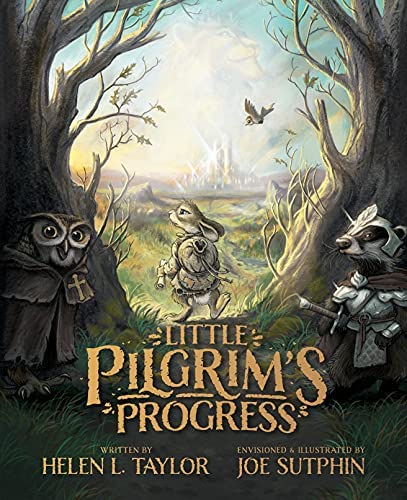
This one is adapted for children to follow, but it is not sugar coated. While there are endless chances for lessons and application, including a call to salvation, we will give a few examples here of the most perilous parts so parents of younger, less mature children can make sure they are ready for the story.
While it is a great and true point allegorically, young readers hear early in the book that the wicked city of destruction “will be burned, and all the townsfolk in it will be killed”.
A character representing self tells Christian he will kill him.
A wicked governor has Christian and his companion Faithful beaten (no details are given)
A giant also is said to beat Christian and another traveler Helpful. When the boys are extremely hopeless, the Giant offers them poison to end their life. Christian is so down he considers it until Helpful tells him they should not. Later the Giant shows Christian the bones he claims to be the bones of other pilgrims he has killed.
That is the most “intense” content of the book that we want to make you aware of. Note that the illustrated version may add a bit to a child’s ability to picture this so be aware of that as well.
One additional note here, while the “Little’ version of this book was aimed to bring this book to children it does use a lot of terminology we no longer use today. It may be worth finding a more current retelling or reading it with your child and helping decipher as the names of the characters are meant to help with the allegory.