

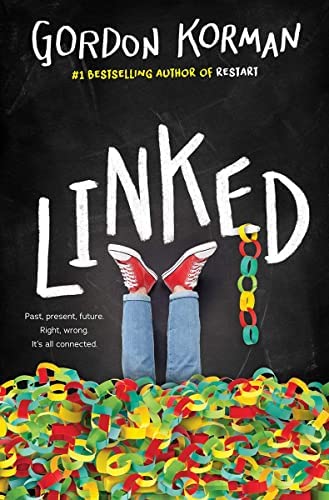
We dig into the main concern more in the next section, but the most important thing to know is that there is some unfortunate, confusing and misleading content around the Jewish and Christian faith in this book for children. Here is what young readers would find in this book:
In the story Grandma finds out she is Jewish by birth. A confusing conversation unfolds between her grandson Link and daughter (Link’s mom) that is not only confusing, but dangerously misleading (“No, she isn’t (Jewish). We were just there last Christmas!...” to which the reply comes, “She never knew… by the time she found out she had lived 80 years as a Christian woman… Nothing different Link. We’re still the same people… we’re not changing churches or religions this late in the game.”. yes, you read that correctly).
This sad thread continues through a lot of the book. Later upon thinking about being from a Jewish line on his mom’s side, Link further confuses young readers, “I found out I’ve been the wrong religion (Christian) my whole life”.
Link finds the only other person Jewish by family and she responds, “Wait a minute… you want to be Jewish? Like, change your religion?” to which he shrugs unhappily, “I don’t know. It’s not like religion is a big part of my life to begin with. We’re not regular church-attenders or anything like that”. She then replies, “We’re not religious either. We don’t keep kosher or go to services every week. We’re a hundred miles from the nearest synagogue and my family’s with it. We celebrate the holidays, but we do it in our own way. My parents are fossil hunters. Their careers are more important than being religious”... so there’s that…
This same friend tells Link, “A bar or bat mitzvah is the happiest day in a Jewish kid’s life… you know why?... it’s not the presents. It’s the fact that it’s over”.
Looking back on his “Christian upbringing” Link’s father says, “If you’ve been to church a dozen times, it’s a lot – and even then you had to be dragged, kicking and screaming”.
One kid brags he is starting his own religion and that the festival of “eating sacred pizza” is coming up.
When trying to think about why Link is going through with a bar mitzvah, a friend thinks, “because he suddenly got religion? He’s not the type… why not stick with the religion he already has?”
Near the emotional end, grandma tells Link, “I was too old to change. I was born Jewish… but it’s not who I am. At my age it’s too late for me to be anyone else” (then she praises Link for doing the opposite).
This book revolves around the holocaust. It kicks off with the discovery of a swastika having been spray painted by someone at the local school. The author keeps things light for the most part, but it does bring up things like the KKK, racism and genocide that are at their core very serious. If you consider everything here and let your child read this book it is probably important to make sure they understand these things. At one point a character remarks, “A swastika sends you directly to the n-word, do not pass Go, do not collect $200”. A few more intense comments (out of place from the lighter feel of Korman’s books, including the majority of this one) are made:
“Her parents and all her relatives died in the holocaust, murdered by the Nazis”
“That was the last time I saw my family alive”
“every man, woman and child died in the camps”
“It was my job to bring bodies from the gas chambers to the ovens for cremation”
“He was just loose skin on a skeleton”
“She died of grief”
References to 6-million jewish being murdered”.
Link, the character the story largely revolves around begins the story in a not so great place. He is rude to and about his dad. He is immoral, “The problem with living in a one-horse-town… is you can’t get away with anything” (referring primarily to his desire to commit escalating pranks around town). Referring to vandalism, he says there are “no bigger jokers” than him and his friends.This is made worse by a parent, after a huge and terrible prank, saying, “I was a kid once too. I know sometimes you need to cut loose”. While Link does grow a lot, it is not a pretty start. Even at the end, Mom says, “Don’t you dare” to which he replies, “but it wouldn’t be me if I didn’t do at least one stupid, impulsive thing”.
We should also mention that there is a downside to the very interesting approach Korman and others use to jump between characters each chapter. Often we see life through the eyes of a bully or someone very shallow or a host of other things. This leads to a child reading part of the story through a set of lenses that are less than ideal to say the least. For example, one kid explains, “That’s kind of the rule with me. I never care what teachers say. Things are stupid. People are annoying”.
An ultra-rude professional online video blogger becomes a central character. This puts some interesting focus around things like YouTube that some parents may not want.
Additional items to be aware of:
The parents of a couple characters are scientists digging for dinosaur bones, so inevitably from a secular book you are going to hear a couple references to things like “100 million years ago”.
A girl says, “I feel like… binge-watching Netflix on my phone for 3 straight weeks”.
The principal asks a student not to share a piece of news and they unapologetically and purposely tells everyone he can find, commenting what he was doing was a good thing.
3 kids comment about knowing just where to kick a newspaper machine to steal a free paper.
Feeling ostracized, Link says, “I feel like an axe murderer”.
When his parents suggest he powers down his phone at night, Link replies, “Right. Like that’s going to happen”.
Sadly a girl remarks, “True, eighth graders are pretty negative – I might be that way too next year.” Similarly we read, “You know eighth graders are anti-everything. Well sixth graders are the opposite of that. They’re super gung ho… they’ll wise up”.
A comment is made about Link’s dad that, “maybe because mom told him he has to”. Link also says, “get a clue Dad”.
Commenting on the evil actions of a girl, upon finding out about her families wicked past, “maybe it’s not her fault”.
Someone comments, “Most of us aren’t bad people on the inside, but obviously there’s at least one”.
These terms are used: jerk, idiot, moron, barf, OMG
The following things are referenced: YouTube, Snapchat, Marvel, Monty Python, R-rated movies, santa
A few unfortunate comments we will share: “they’re all snobs and dweebs”, “You know how my dad’s a jerk”, “I don’t lose too much sleep thinking about my family. Bad enough I have to live with them”, “You would have thought I suggested we hunt down Captain America and gut him like a fish” (exaggeration attempting to be funny), “where you can stick your million followers”, “He also deserves a punch in the nose”.