
It is probably best to start with Disney as a whole. Many Christians today have stopped supporting Disney as their company values and what the agendas they have chosen to champion (and include in their recent movies) run counter to Biblical, conservative Christianity. This book is obviously very focused on this company, primarily their characters and the theme parks. This may be a non-starter for many. There are some scenes that could be scary for children. There is a scene where they go through “It’s a Small World” and dolls come alive, chase the group and attack them. There is a scene where they are nearly drowned on a ride and it is explained in some detail. Several times the main villain tells them she will kill them. An eel creature in the water begins to grab them with their tentacles and attempts to drown them. The main character is not a good example for young children. Later the book confuses the concept of arrogance or conceitedness with confidence. There is a non-Biblical view of a family dynamic. At one point when Mom catches the main character sneaking out her response is that “we can’t tell your Dad.” and again later, “tell me and I won’t tell your Dad.” Later Dad is shown as just sitting around not caring and then “always riding” him to do better. Then Mom always just “asks the same questions”, which he barely answers. At one point it says she gives “the usual lecture about good and respectable behavior. snore.” There is also a non-Biblical view of men. The main character says “girls are smarter than guys at school stuff, friendships, and family stuff.” and that boys are “better at computer games and farting.” When the main character starts to get confused he jokes that he is losing it and then says, “I’m not stabbing girls in the shower or anything.” Later when they go into the Haunted Mansion it describes seeing “a dead man dangling from a noose attached to the ceiling.” At one point it uses an example of “a vampire sucking blood”. Witches are mentioned frequently, typically in reference to Maleficent. There are references to ghosts, goblins, ghouls. Halloween is glorified quite a bit. There are a few characters who seem to be introduced for the sole purpose of allowing the author to make insensitive comments. An overweight friend is described as wearing “a sweatshirt big enough to cover a chair with” and then “eating enough for two kids and having the body to show for it.” A teacher is said to be “the most boring teacher in the whole school”. Another character “spoke with a British accent that sounded like a pompous snob.” When meeting a new group of kids central to the story the main character only focuses on the most beautiful girl and then shallowly refers to the second “not as pretty” and “geeky”. Later it describes a crowd as “fat people, sweaty people, smelly people, bald people.” There is an odd inclusion that seems to take a shot at religion as “strange”. Upon meeting a new character the author has him walk up and with no context and tell him he was a Baptist. The main character then says, he “wasn’t terribly religious and didn’t know what to do with that information or what that meant.” Later there is a worry he will be “carried off to the loony bin, or worse, their minister.”

Psalm 101:3
Quick Answer: Avoid
Concern Level: Medium-High
It is probably best to start with Disney as a whole. Many Christians today have stopped supporting Disney as their company values and what the agenda... → Continue reading below
Kingdom Keepers 1 – Disney After Dark
VERDICT: Avoid
Concern Level: Medium-High
Christian Parent Review
This is a really neat idea for a book. Many kids have used their God-given imaginations to think about what would happen if a place like Disney World came to life at night. This is what the author has chosen to bring to life for us here and it is exciting from start to finish. Unfortunately, as we often see, the positives of this book are clouded by a long list of things that Christian parents would rather not expose their children to. This book puts a lot of focus on a popular kingdom… unfortunately for us it is not the ultimate Kingdom we are called to focus on. With its emphasis on a company pushing non-biblical agendas on children, its negative shots at our faith, a couple of horror-movie like references, rude elements, negative family representation, characters who are not good role models and a grab bag of other concerns, this one is likely best to avoid.
Note: This information is typically from the publisher.
Use with caution
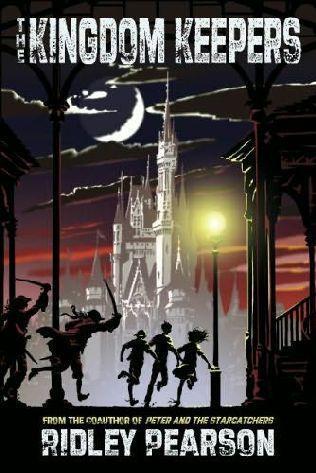
In this fantastical novel, Disney's Magic Kingdom suddenly becomes a bit eerie. Finn Whitman and four other teens have been hired as Disney World guides, but with an odd twist: With cutting-edge technology, they have been transformed into hologram projections capable of leading guests around the park. What begins as an exciting theme park job turns into a virtual nightmare as Finn and his pals attempt to thwart an uprising by a menacing group of Disney villains.
Above Reproach: We intentionally do NOT use referral links on this site.
No purchase convenience link provided for 'Avoid' books
Other Reviews for this Book
Squeaky Clean Reviews
Unfortunately, this review fails to include nearly all of the concerning content listed above. As Christian parents we need to ensure our desire for wanting to promote a really neat story idea does not cause us to turn a blind eye to content that opposes the biblical worldview we work so hard to instill in our children.
Read ReviewScripture Reflection
Do not love the world or anything in the world. If anyone loves the world, love for the Father is not in them. For everything in the world—the lust of the flesh, the lust of the eyes, and the pride of life—comes not from the Father but from the world. The world and its desires pass away, but whoever does the will of God lives forever.
— 1 John 2:15-17
--- See More Christian Parent Reviews ---
More Christian Parent Reviews