

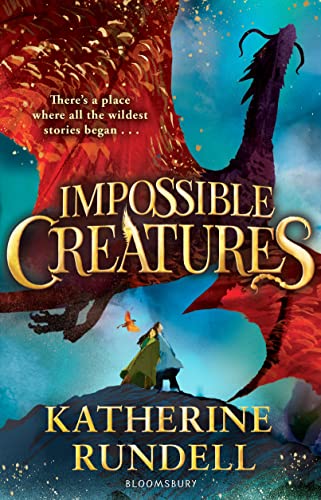
The biggest thing to know for this title is that there are some intense sections that won’t be for all readers (younger and/or more sensitive readers). They are sparse, but important to know about. Early in the book we meet “a murderer” (as he is called) who makes no attempt to hide that he is there to kill Mal. In fact, he does murder her great aunt (sliced by a knife across her chest, not very graphic, but does mention “red was flowing down the front of her apron” before she falls to the floor. This “murderer” appears a handful of times before he himself is killed. They visit an island where the worst murderers are sent, bringing up some focus on ‘murder’ (along with the previously mentioned character). There are occasional intense comments (“we’d have been eaten, face first”). A few of the illustrations can also be frightening to some.
Another important item to know about. The plot revolves around a concept known as “the Immortal”. At first this name is used in ways that make the reader think it is being used for “God” (or a god, such as “by the Immortal!”), but we eventually find out that in this world there is a single “Immortal”, described as “a soul”. When they die they are reborn in a new baby’s body (although at first it says it was an apple, then a series of creatures before starting on humanity, which is a bit odd and confusing). There is not necessarily a lot of references to “reincarnation”, but anyone who knows that concept will see that here for this one ‘person’. This is typically kept pretty light, but there is a somewhat emotional moment where we hear, “It’s truth, boy”.
Like Rundell’s last book we reviewed (Rooftoppers), there are several references to alcohol. Most of it revolves around one of the ‘good’ characters, a ship captain who becomes an important part of the story. He pours a bottle of brandy into his coffee. He drinks from his “hip flask”. The characters end up in a pub and he has a bottle of wine. He orders another, to which a character comments, “shouldn’t we keep our wits about us?” to which he replies, “I see no reason. I prefer the world when drunk. It disappoints me less”. He stays up a whole night drinking whiskey, seemingly missing his friend who has died (a hangover is mentioned). We should mention he completely gives this up when he steps into his life mission. Christopher’s older uncle also drinks whiskey.
There are a few pretty deliberate shots at humans and their impact on the earth placed in front of young readers. A history tells of humans exploiting magical creatures, saying that many died out as they “hunted them to extinction”. Later we hear, “The Immortal, a brave woman,… made the decision to protect us from the relentless destruction of humankind”.
Other things to be aware of as a Christian parent:
There are a few references to “a seer”. A lady is said to be a fortune teller and Christopher pays her to read his palm (there is later inference that she did see something in Mal’s hand). Babies are named by “a namer” who goes “into a trance” and comes back with the name. There is some focus on magic, though not as much as you might think from the plot/world.
We are told Mal is raised by a great aunt who “forbade an immense, book-length amount of things, and she (Mal) couldn’t obey them all.”
Upon arriving at his uncle’s house, Christopher immediately sets out to violate the one rule he has been given. To go to the one place he has been told not to go. Worse, he justifies it in his head by discussing his dad’s extreme worry for his safety, as if that makes it ok (although he does mention loving his dad, which is a nice addition).
When the sea captain’s cargo is destroyed, he is asked if he will have to repay the owners, to which he replies, “only if they find me”.
The concept of luck comes up multiple times. In one instance a character says, “beauty is not a sin… It is one of a thousand pieces of possible luck, and you were lucky.”
The following terms appear: farting, idiot, damned, ‘arse’ - as in “I will kick you in your substantial arse”, “Bloodyhell”. At one point someone says something incoherent to which the book comments they are “certainly swearing”.
There are a few intentional lies told by the main characters. We hear that Christopher “is a very good liar”. Mal makes a comment about Algebra being useless.
Christopher and Mal sleep in the same bed for a portion of the story, but there is nothing romantic implied at all, but still a good thing to address with your child.
There is a comment that love “is what is meant by miracles”, which sounds pretty, but is obviously misleading.