

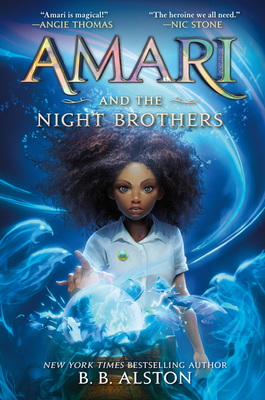
‘Magicians’ are a main focus of this story, but that word may be misleading. The way to think about these characters are regular, everyday feeling, people who practice magic… which brings us to the real consideration for Christians. How does this line up with the at least closely related practices we are told as Christians to stay away from in the Bible? Is it different when a ‘good’ character uses ‘magic’ to battle evil? Or are we just tiptoeing along a line further and further away from the holiness (call to be set apart) God calls us to? This has been a challenging question for Christians for a long time, especially when it comes to ‘entertainment’. We think reading everything below all at once, instead of sprinkled throughout an engaging story will make it clear how we should feel about this one.
And just to be clear… this ‘magical’ content is pervasive, coming up page after page after page (often referred to here as ‘supernatural’). This is not Disney princess whimsical magic. We read of magic, enchantments, spell books and curses. The revealed world is filled with things like werewolves, weredragons, witches, boogeyman, ‘stepmother’ haunting, math gods and more. One side character is said to be a medium (communicates with the dead). There is a comment about a haunted house. Someone tells Amari to “remember, your magic is alive… It can sense your doubt”. There are several mentions of reading Amari’s ‘aura’. A crystal ball plays a major part in the storyline, but it is less about viewing the future, but rather a different, but similar magical use. A spell is said to be able to bring back the dead (involves draining life from the living). Amari herself (the hero) casts spells, one of which shows her rival her worst nightmare.
In one part of the book we see this blurring of good and evil really come into focus. Amari visits the “Department of Good Fortunes and Bad Omens”. During this visit we hear of crystal balls, tarot cards, ‘readings’, and fortune tellers. Near this point we also see her and her friends visit an “All Souls Festival” where ghosts appear and mingle with the living.
We want to make sure to point out that there is one reference that is far out of measure with the rest in its “darkness”. The evil magician characters are described as having figured out how to prolong their lives like vampires by “consuming the blood of the innocents”. This is never shown in detail, but is mentioned a few times and, at one point, we see one of these characters drinking from a cup and are told blood is trickling down his face. Again, nothing else that is surface-level as dark-feeling as this, but it is a really important one to know about.
Aside from that main potential concerning content category, there is a bit more to be aware of.
The story opens with Amari in the principal's office, as she has shoved a girl who “got in her face”. While the other girls are clearly shown to be the instigators and ‘in the wrong’ there is much to be desired with our main character’s responses. She calls the main perpetrator “stuck up little Mrs. Princess”.
Amari and her brother live with her mother. We find that her dad left them. She recalls her father as a drunk and describes a time when she overheard him say, “She probably isn’t even mine. Tell whoever her real daddy is to get her that stupid bike”.
We read that Amari and her brother used to sneak up to the roof all the time despite not being allowed. She justifies it with a really disappointing comment, “like we didn’t have enough sense to stay away from the edge”. On a similar line, Amari sneaks out of her house when she is not allowed, and this is not shown in a negative light.
Amari’s brother, who is held in a super-positive light, is said to have “rap posters” and a signed picture of Steven Hawking in his room.
A cigar collection is referenced.
A magazine is titled, “Deadbook: A Ghoulish Fashion Guide”
A wicked girl in a waking dream dissolves when sunlight hits her.
An old memory is brought up of one of the evil characters having a stake driven into their heart by a ‘good’ character in the past.
The following references are all present: devilish charm, sucks, ‘pretty dope for a cavewoman’